
Home › Guides › Crate Training
Crate Training a Puppy: A Gentle Step-by-Step Guide (Plus Night Tips)
Reader-supported: some links here are affiliate links.
A crate can become your puppy's favorite cozy den — a safe place to nap, a big help with potty training and a lifesaver when you can't supervise. The key is introducing it gradually so your puppy sees it as a happy place, never a punishment.
Why crate train?
- Potty training help. Most puppies avoid soiling their sleeping area when the crate is the right size.
- Safety. It keeps a curious puppy away from cords, shoes and household dangers when you can't watch.
- Rest. Puppies need lots of sleep, and a quiet den helps them settle.
- Travel and vet visits. A crate-trained dog is less stressed in a carrier or at the vet.
Choosing the right crate
Your puppy should be able to stand up, turn around and lie down comfortably. If the crate is much bigger, your puppy may use one end as a bathroom. Many wire crates come with a divider so you can make the space bigger as your puppy grows.
Add a washable bed or blanket and place the crate in a room where the family spends time — puppies don't like being isolated.
Step-by-step crate training plan
Move at your puppy's pace. Some puppies fly through these steps in a few days; others need a couple of weeks.
Step 1: Make the crate a treasure chest
Leave the door open. Toss treats and toys inside when your puppy isn't looking, so they "discover" good things there. Praise any time your puppy goes in by choice.
Step 2: Feed meals in the crate
Place the food bowl just inside the door, then gradually further back as your puppy gets comfortable. Meals are a powerful way to build a positive association.
Step 3: Close the door for a few seconds
When your puppy is happily eating inside, close the door. Open it as soon as they finish, before they get upset. Gradually leave it closed a little longer after meals.
Step 4: Add a cue and a chew
Say "crate" or "bedtime," toss a treat inside, and when your puppy goes in, give a long-lasting chew or a frozen stuffed food toy. Close the door and sit nearby for a few minutes. Then calmly let them out.
Step 5: Build up time and distance
Gradually increase how long your puppy stays in the crate and start leaving the room for short periods. Come back calmly — no big emotional greetings — so comings and goings feel ordinary.
How long can a puppy stay in a crate?
As a general guide, young puppies shouldn't stay crated during the day longer than they can hold their bladder — often estimated as their age in months plus one, in hours, and usually less. They also need plenty of exercise, play, training and time with you outside the crate. For long workdays, arrange a mid-day visit or a pet sitter.
Crate training at night
The first nights are often the hardest. These tips help:
- Keep the crate in your bedroom (or sleep near it at first). Puppies feel safer when they can hear and smell you.
- Tire them out kindly with play and a short training game an hour or so before bed, then wind down.
- Potty right before bed.
- Plan night breaks. Young puppies usually need one or two. Take them out quietly, then straight back to the crate.
- Comfort items. A soft blanket can help (avoid anything they might chew and swallow).
What to do when your puppy whines in the crate
First, ask: could they need the bathroom? If it's been a while, take them out calmly on a leash, then back to the crate.
If you're confident their needs are met, wait for a brief moment of quiet before opening the door, so whining doesn't become the way to get out. Many owners find that sitting next to the crate at first, then gradually moving away over several nights, makes the transition much easier.
If your puppy panics — drooling heavily, frantic scratching, trying to escape, injuring themselves — stop and slow down. Constant distress can be a sign of separation-related problems, and a veterinarian or certified behavior professional can help.
Crate training mistakes to avoid
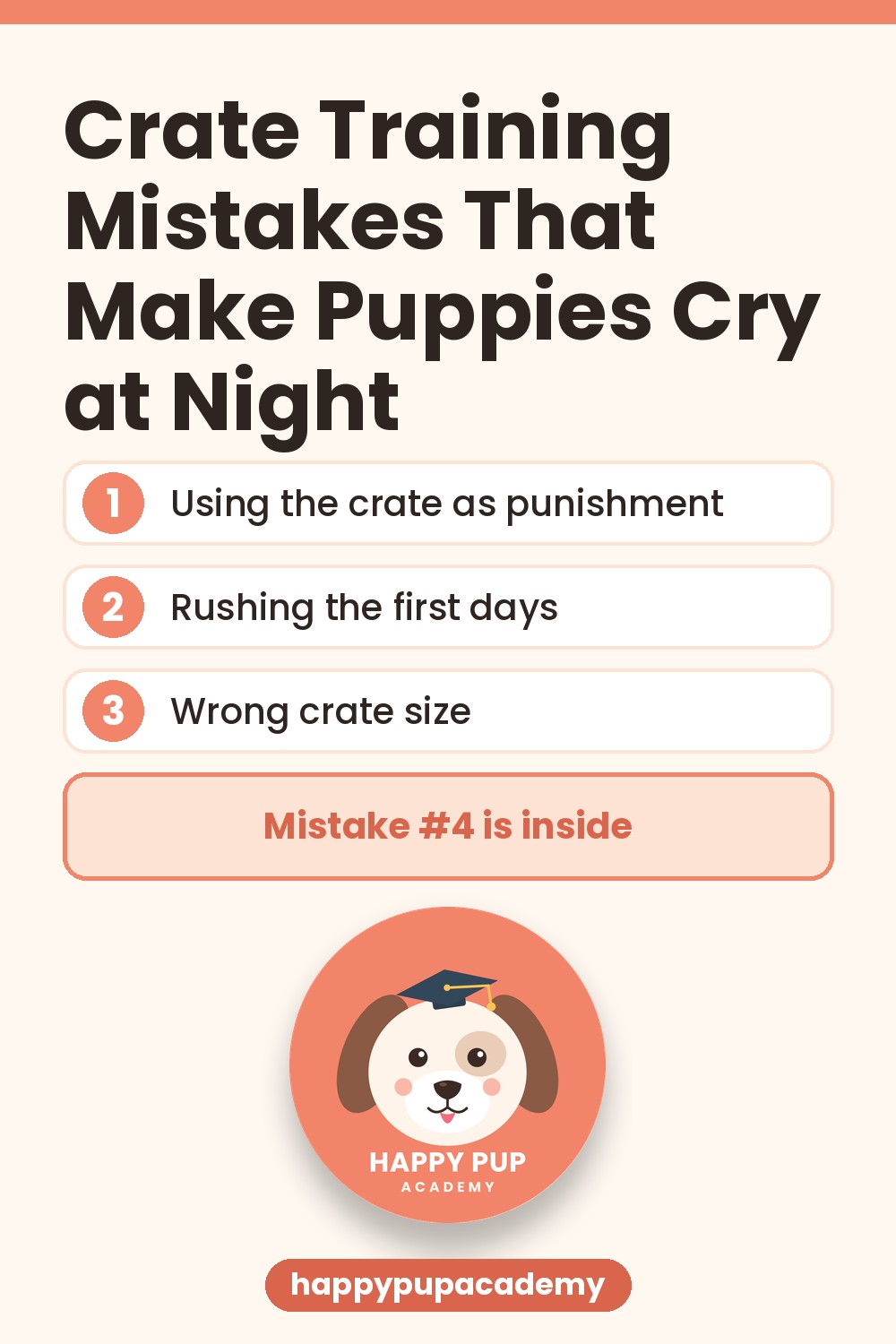
- Using the crate as punishment. It should always be a good place.
- Going too fast. Long periods alone before your puppy is ready can create fear.
- Leaving collars or tags on that could catch on wire — many owners remove them in the crate.
- Crating for too long. A crate is a tool, not a substitute for exercise and attention.
Make crate time easier with brain games
A mentally tired puppy settles much faster. Five minutes of a simple game — "find the treat," "touch my hand," or a short impulse-control exercise — before crate time can mean the difference between whining and snoozing.
Want a done-for-you training plan?
Brain Training for Dogs is packed with short, positive games that tire your puppy's brain — perfect before crate time and bedtime, and great for building calm, confident behavior.
See Brain Training for Dogs →(affiliate link)
Quick recap
- Choose a crate your puppy can stand, turn and lie down in
- Make it a treasure chest with treats and toys
- Feed meals inside
- Close the door briefly, then build time slowly
- Keep the crate near you at night with planned potty breaks
- Never use the crate as punishment
FAQ
Should I cover my puppy's crate?
Many puppies settle better with a breathable cover over part of the crate, like a den. Make sure there's good airflow and your puppy can't pull the cover inside and chew it.
Should I put water in the crate?
For short periods it usually isn't necessary. For longer periods, ask your veterinarian. Many owners use a clip-on bowl to avoid spills.
How long does crate training take?
Some puppies are comfortable in a few days; others take several weeks. Go at your puppy's pace.
Free: The 7-Day Calm Puppy Plan
A printable one-page routine — what to do each day for biting, potty breaks, crate time and play. Get it free by email.
Sign-up opens soon.
Save this guide for later
Found this helpful? Save it on Pinterest so you can come back to it.